Jonas Denzel x Motel One Karlsruhe
Profile
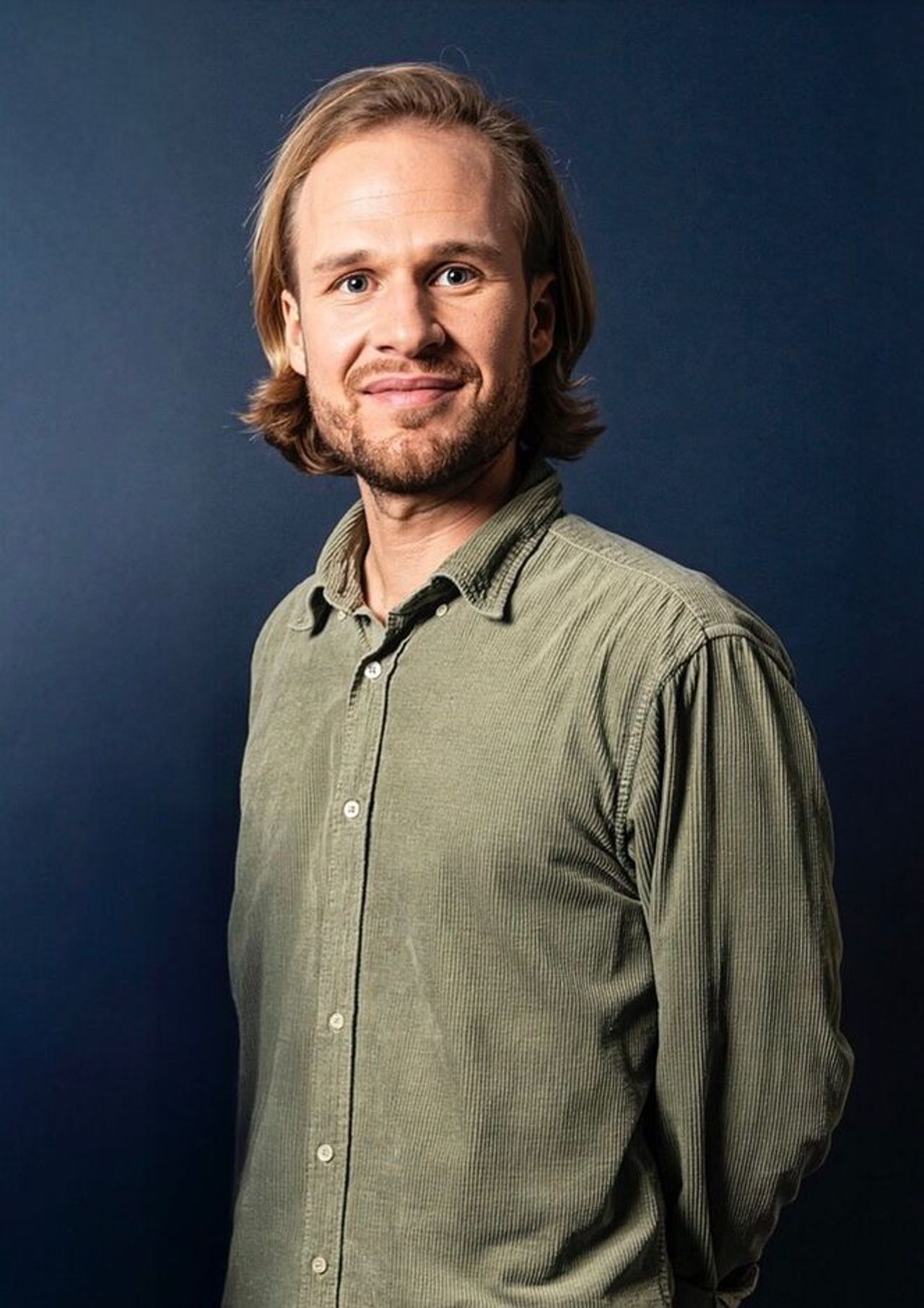
- Born in 1990, lives and works in Karlsruhe
- Filmmaker and media artist specialising in projection mapping, video installation and documentary film
- Awards include: Art Directors Club Germany (2019, ‘hands-on’), Genius Loci Weimar (2019), IMAPP Bucharest (2021), Audience Award in Pécs (2024), Art Prize of the Langenfeld Art Association (2024)
- Founder of BEAMBIKE, a project that makes projection mapping flexible and accessible to all
- As an artist and drummer, he uses rhythms and patterns to create interactive projections in which the audience becomes part of the works and their settings
7 questions for Jonas
What is the title of your artwork? What is the special significance behind it?
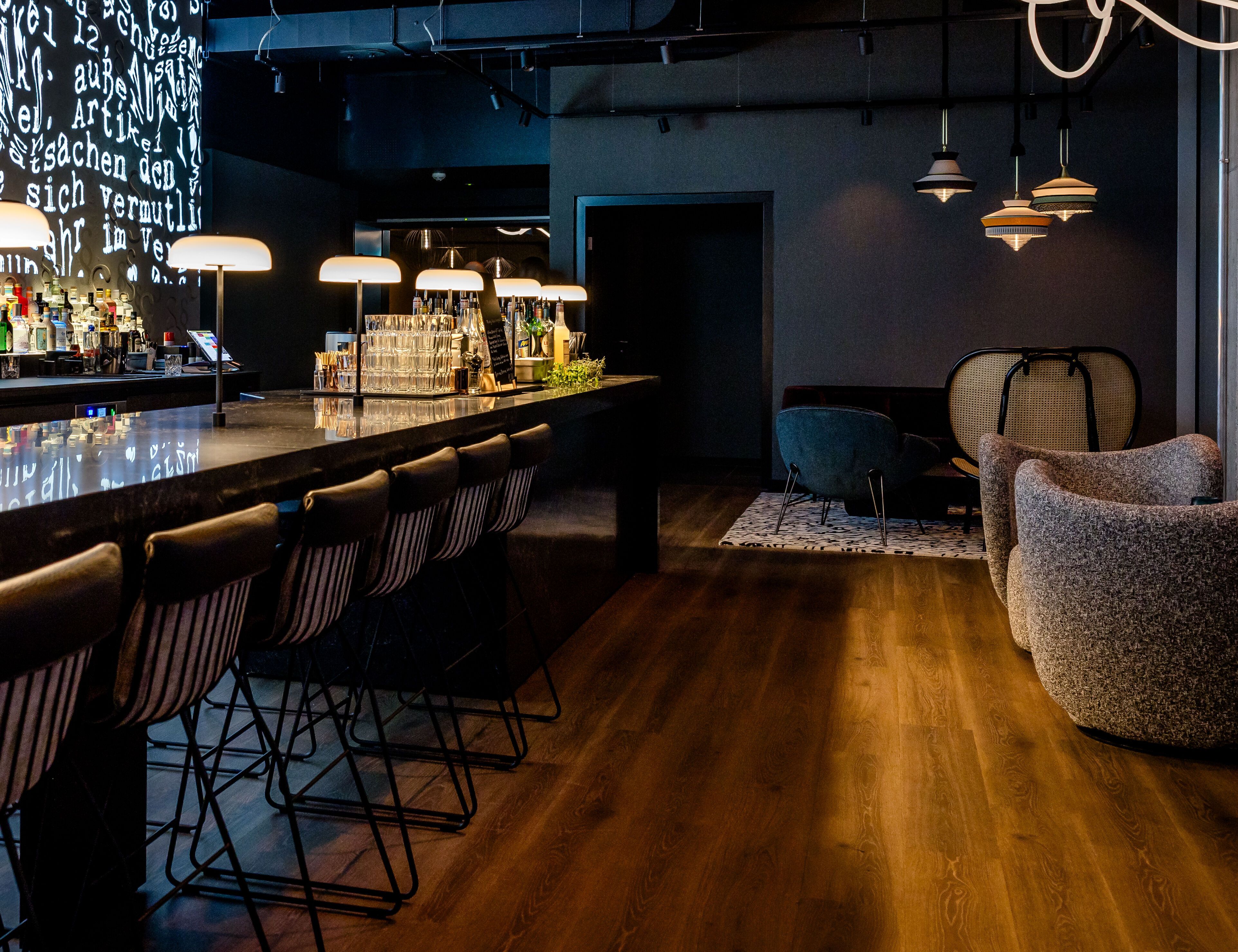
*Dancing Rights* (2026). The work represents dance and movement in connection with our fundamental rights. It was important to me to present the theme of rights within a vibrant framework that creates
a dynamic dialogue between the body and space. What are the central elements, and what message or emotion do you wish to convey through them?
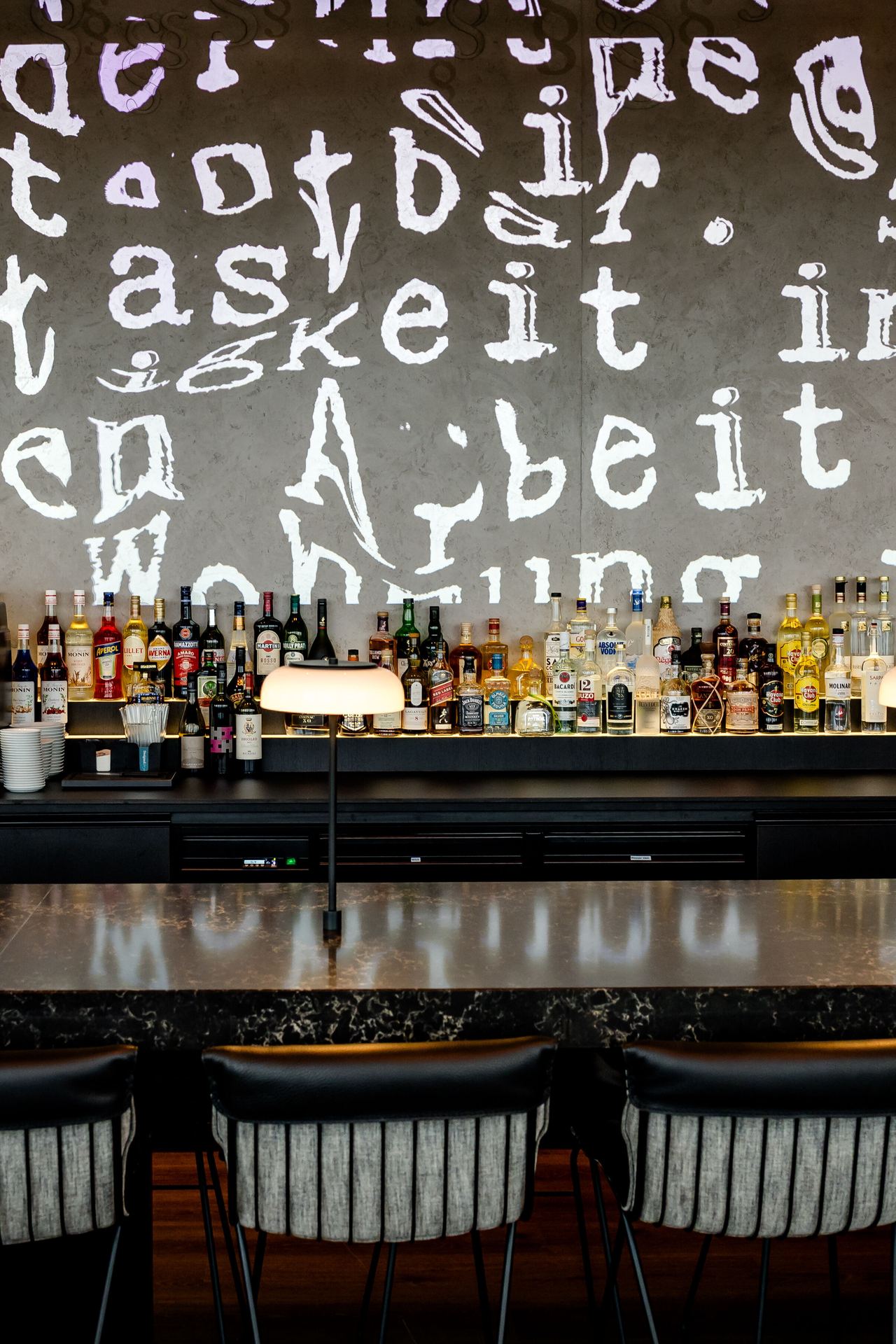
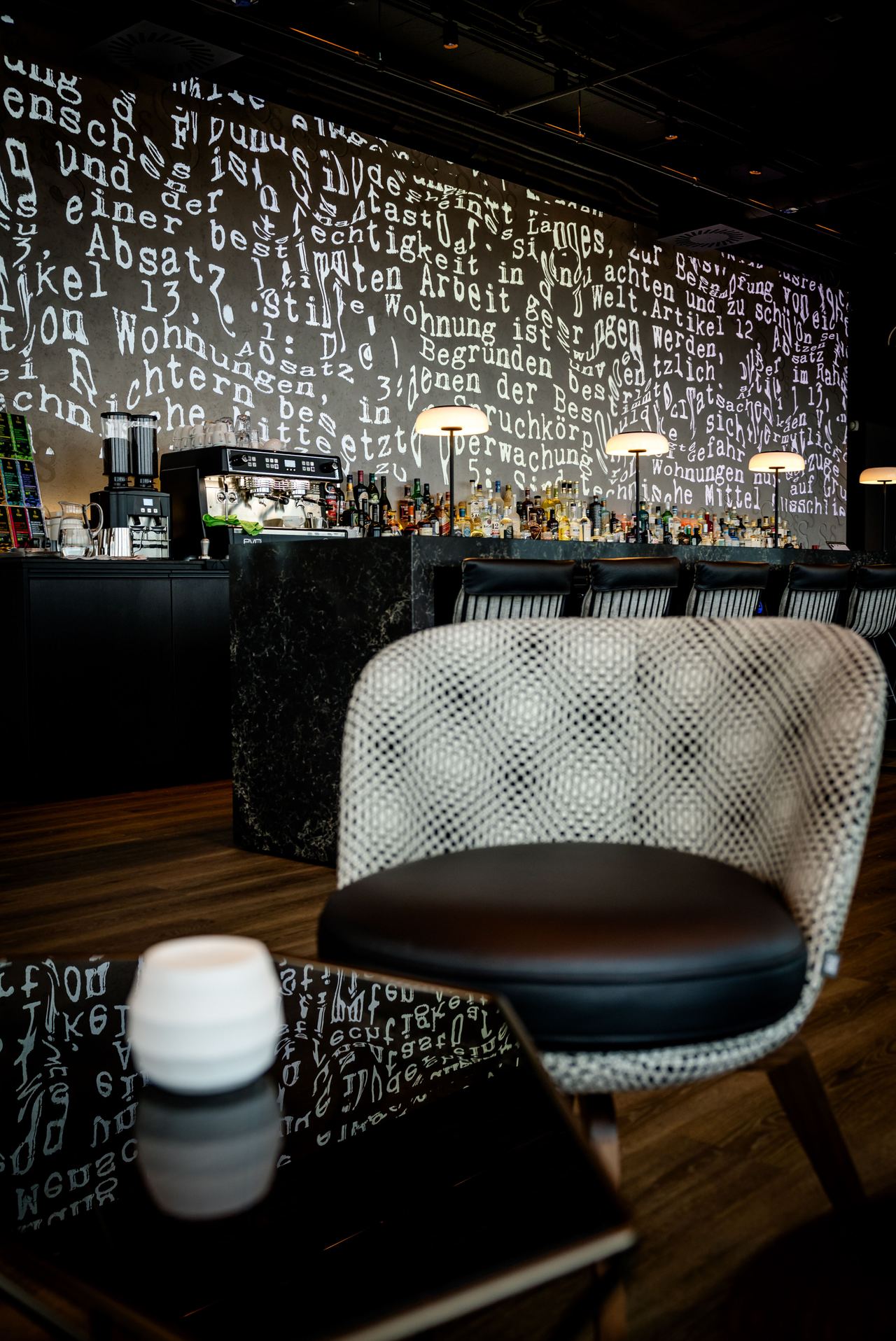
Fundamental rights interact with us on a daily basis and shape our social lives. Without them, a democratic society based on humanist values would not be possible. The installation ‘Dancing Rights’ explores all 19 fundamental rights in a playful way. The legal provisions are removed from their conventional setting and presented typographically in a new context. This creates a sense of alienation that allows a fresh focus on the essential rights – a typographic dance in black and white between right and wrong.
What inspired you to create this artwork?
The city of Karlsruhe itself serves as a key source of inspiration. Karlsruhe is both a City of Media Arts (UNESCO City of Media Arts) and a city of law: as the seat of the Federal Constitutional Court and the Federal Court of Justice, the city holds particular significance for the examination of fundamental democratic rights. This tension forms the thematic and design basis of the work.
What materials and techniques did you use for the artwork?
The artwork utilised projection technology, sensor-based interactive technology, and material and printing techniques. Specific individual image moments were extracted from the projection. These snapshots serve as the starting point for a standalone series that transforms the fleeting states of the installation into static compositions.
Were there any particular stories or challenges that arose during the creation of the artwork?
The challenge in this context was to create a work of art that, on the one hand, stands on its own whilst, at the same time, blending into the hotel’s interior and corporate design. This interplay between artistic autonomy and spatial integration was a central part of the design process.
How did the commission come about? What motivated you to take part in this project?
The commission arose from my connection to my home town of Karlsruhe and my artistic practice in the field of projection mapping and media art. Motel One became aware of my work – including my contributions to the Schlosslichtspiele Karlsruhe – and this led to a request to develop a site-specific work for the Motel One in Karlsruhe.
To what extent does your work reflect the atmosphere, style or philosophy of Motel One or the location?
The hotel bar, with its drinks, conversations and movement, provides the ideal context for the text to flow. Just like the liquids in the room, the social interaction is constantly in flux – nothing remains static; everything is in a state of transition. This atmosphere is directly conveyed through the projection: the text reacts to the dynamics and the audience in the room, dissolving fixed contours, flowing and constantly reforming itself. In this way, the ‘fluidity’ of the bar itself – from drinks to encounters – becomes the creative foundation of the work.