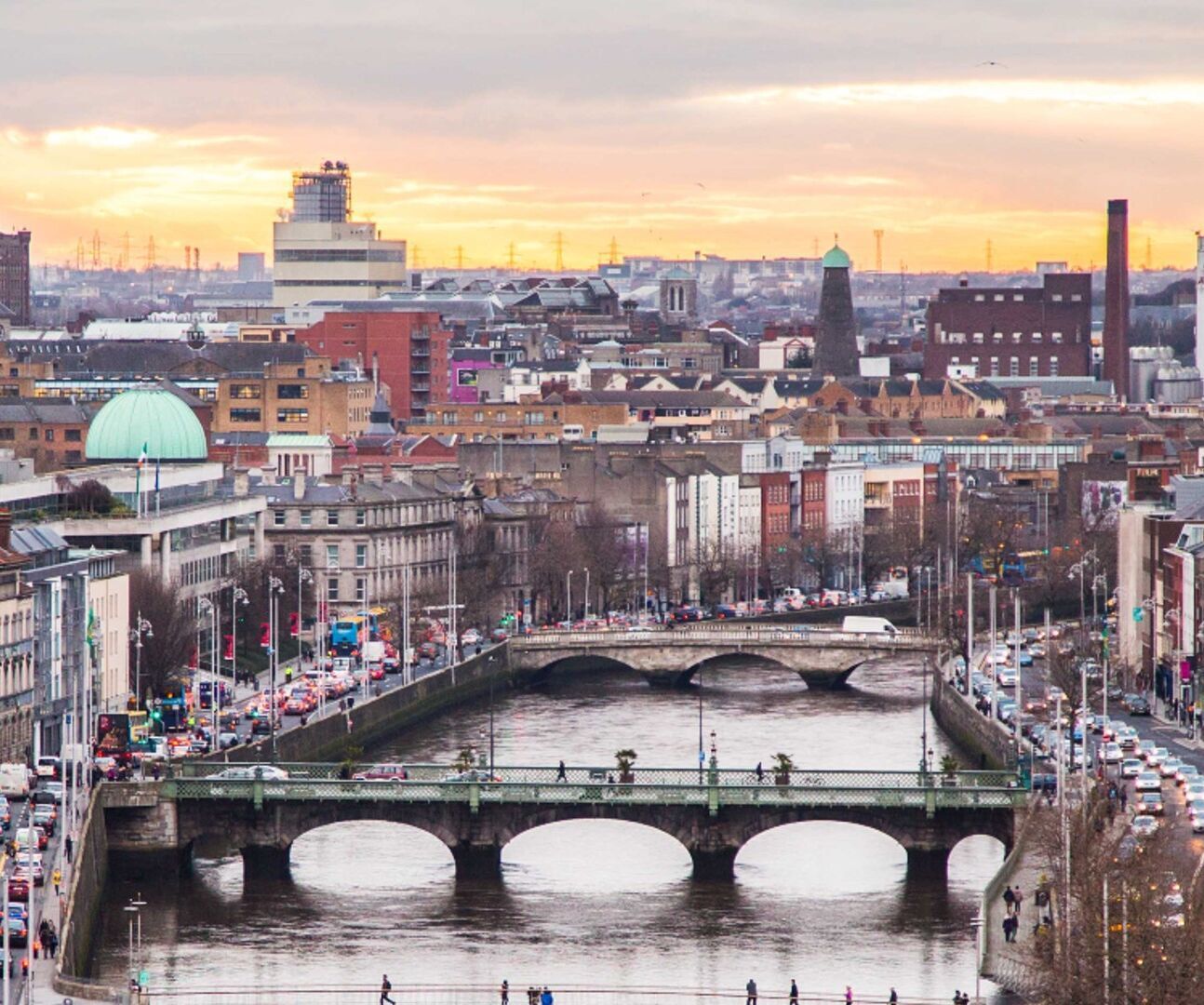
Released in 1922, James Joyce is said to have stated the following about his novel Ulysses: ‘I want to create an image of Dublin so complete that if the city suddenly disappears from the ground, it could be rebuilt from my book in its entirety.’ And he succeeded. For a whole day on 16 June 1904, his protagonist Leopold Bloom walks through the streets of the Irish capital, and you can follow his path even today because 14 signs mark the most important points. There’s Sweny’s Pharmacy, for example, which still exists today: this is where Bloom buys lemon soap, the fragrance of which accompanies him throughout the day. In the Davy Byrnes pub, he enjoys a Gorgonzola sandwich with mustard and a glass of Burgundy. You can still enjoy the famous sandwich there today. When Bloom meets his wife’s lover after dinner, he escapes to the National Library of Ireland.
The impressive reading rooms are particularly popular on 16 June – the day known as Bloomsday that’s celebrated in the city every year. People all over Dublin wear costumes inspired by 1920s fashion: ankle-length dresses and straw hats for the women, black suits and top hats for the men. Some of them put on round glasses, just like James Joyce wore. But what makes the novel one of the hundred most important works of the 20th century? On the one hand, it was a literary sensation because it consistently implemented the stylistic device of the internal monologue, something completely new. On the other hand, Joyce creates an intense picture of his city, so vivid and colourful that it really feels like you’re travelling back in time to Dublin over 100 years ago – either between the covers of the book or on a varied walk in the footsteps of Leopold Bloom through the Dublin of today!