3 cities, 2 countries, lots of impressions
All city centres are compact, so you can easily manage without a car. Therefore, it’s best to take the train when travelling between stops on your road trip. This will take you directly from one city to the best central location in just a few hours.
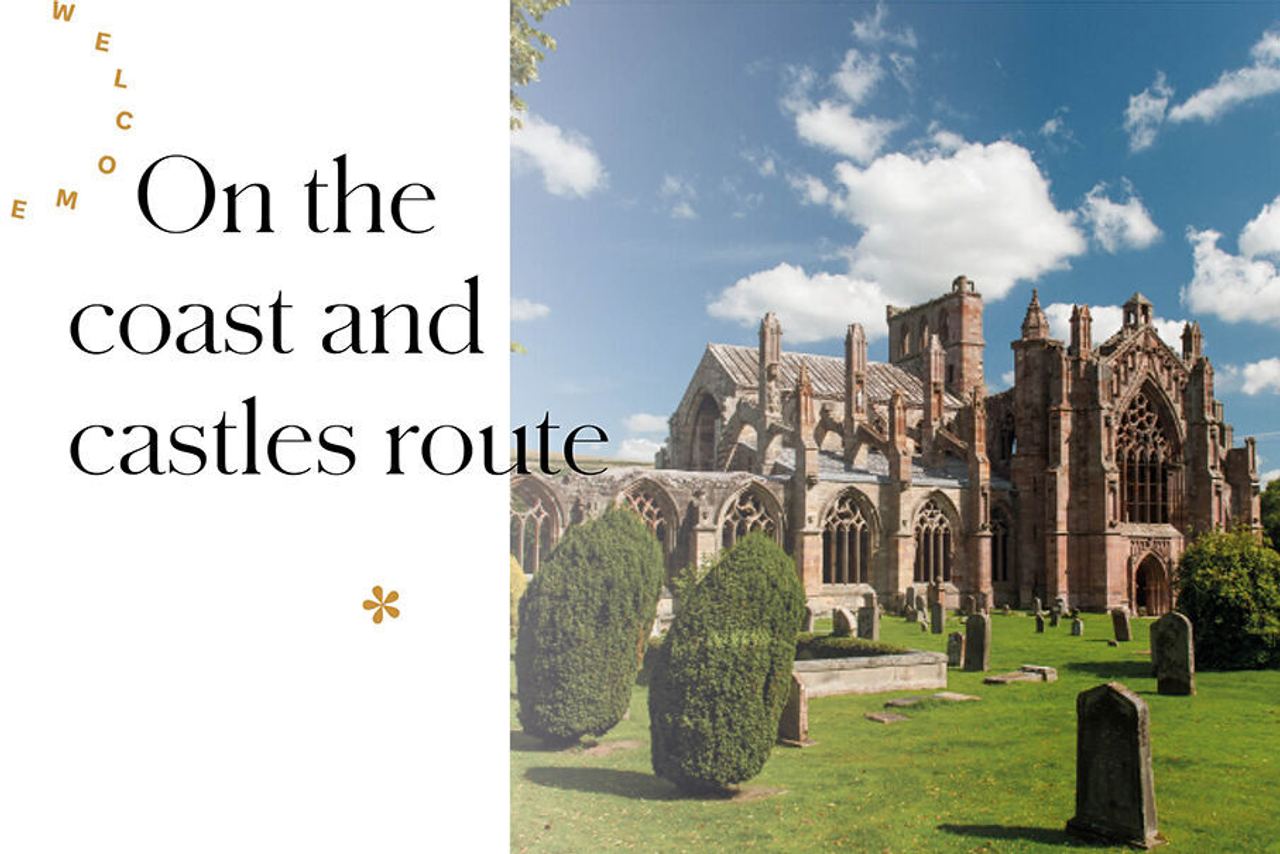
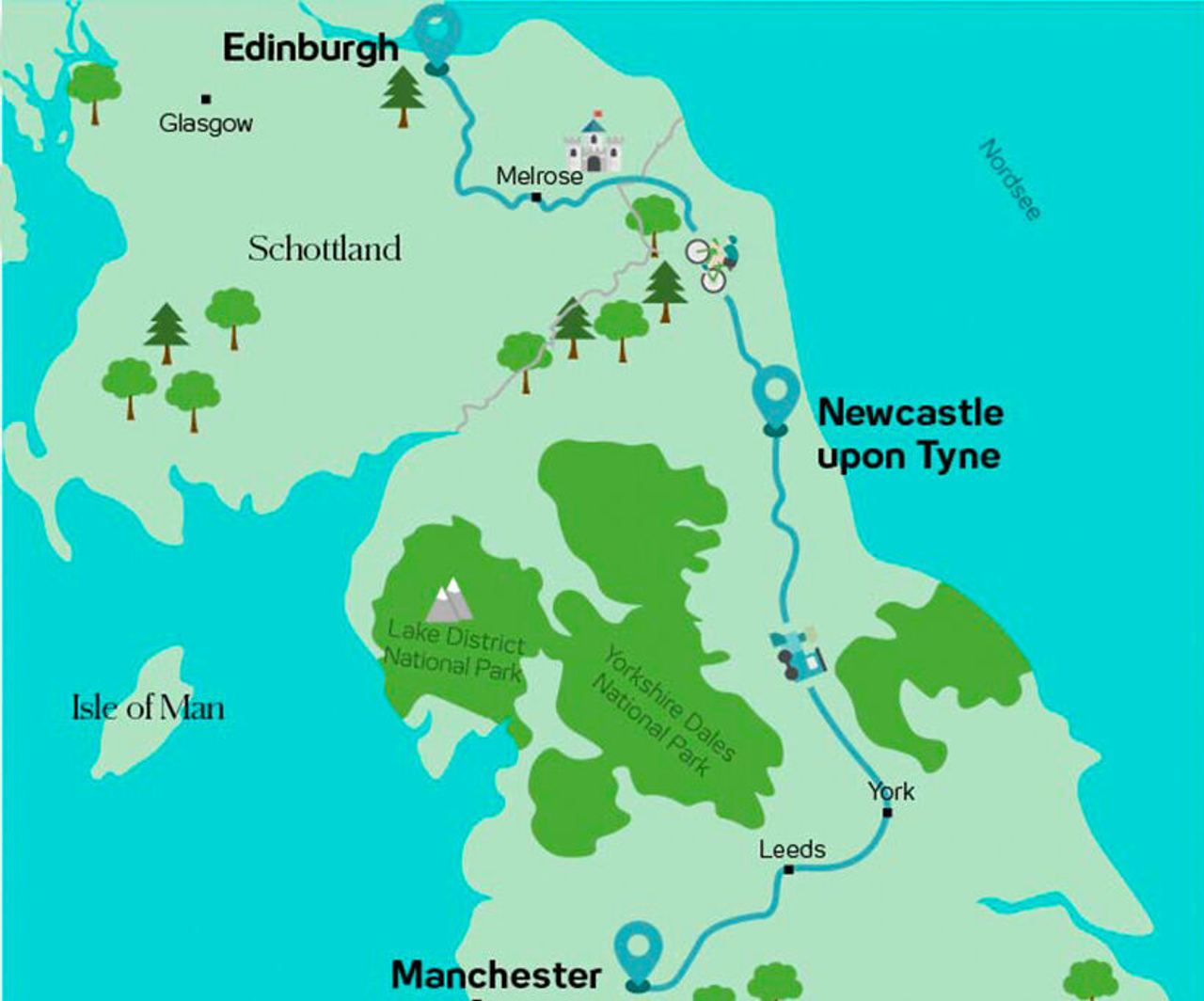
Alternatively, you can also go on a multi-day cycle tour between Newcastle and Edinburgh. The route is part of the National Cycling Network (). The Coast and Castles Tour follows the southern North Sea Cycle Route along the coast from Newcastle upon Tyne to Berwick upon Tweed. From there, the route heads inland via Melrose to the Scottish capital. After five to seven days (depending on how fit you are), you’ll arrive in Edinburgh.
Manchester – Newcastle:
approx. 150 miles;
journey time by train: approx. 2.5 hours
Newcastle – Edinburgh:
approx. 120 miles;
journey time by train: approx. 1.5 hours;
journey time by bike: approx. 12 hours or as a 5-day tour
Manchester is regarded as one of the world’s first industrial cities. The city’s grey image is a thing of the past, and a vibrant, creative music scene is bringing a fresh, modern vibe. A good public transport network is also set to make the city greener and help Manchester become carbon neutral by 2038.
What’s there to see?
main are its historic buildings and libraries, such as the John Ryland Library or Chatman’s Library (both of which, incidentally, are free to enter). But anyone will discover that the city has much more to offer. Art and culture enthusiasts in particular will find plenty to enjoy off the beaten track. They are drawn to the Northern Quarter: there are not only colourful murals on the building walls, but also a creative scene, small record shops, concert venues and studios.
Green and (almost) free
Pure culture: Most of the city’s museums and attractions offer free entry – every single day. Architecture enthusiasts can visit , art lovers are drawn to the , whilst amateur scientists and families head to the .
Getting around: You can explore almost everything in the city on foot. Those who prefer public transport can make use of Free Buses, which carry passengers free of charge.
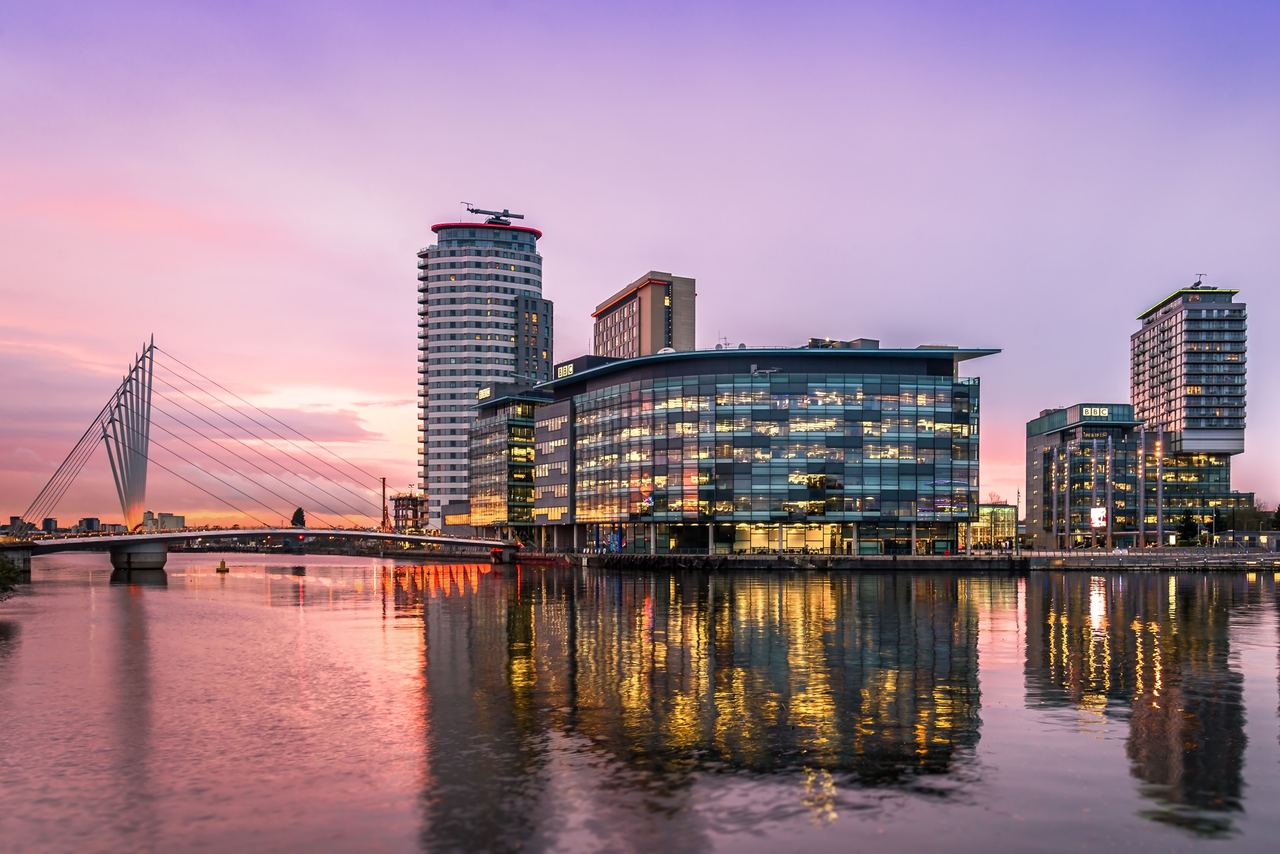
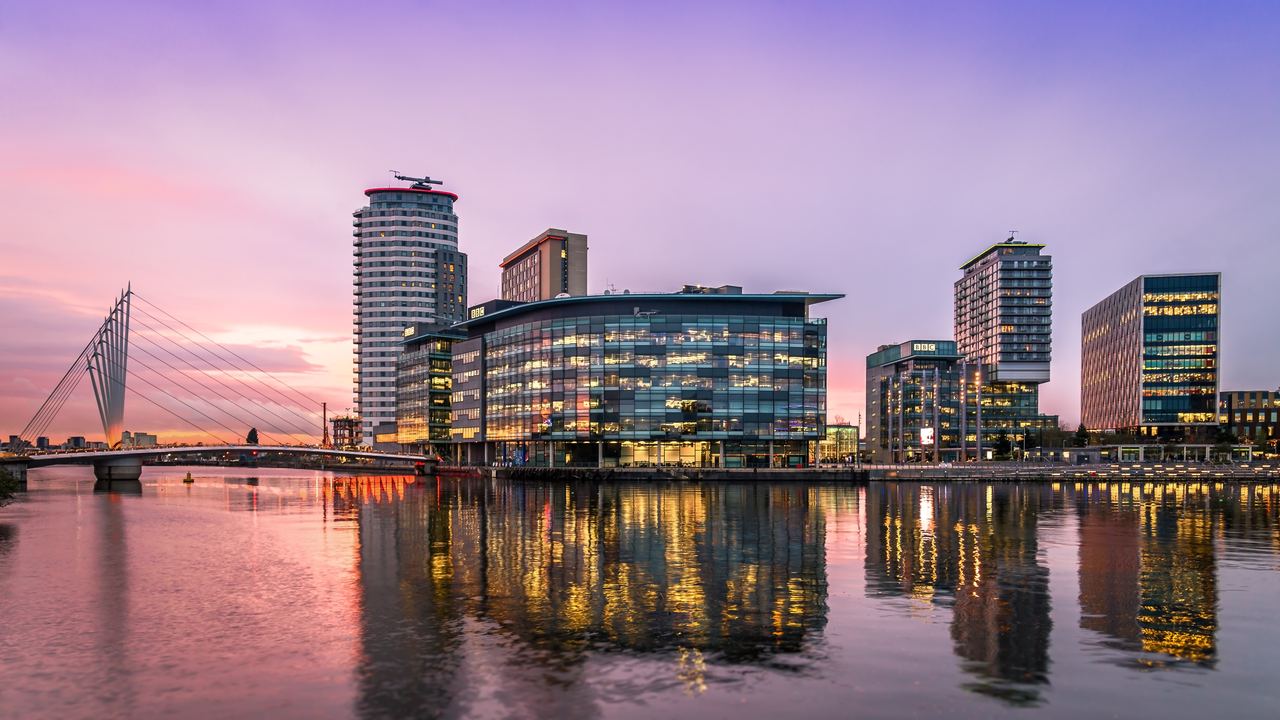
Natural spectacle: Every evening at Salford Quays (admittedly, especially when the sun is shining), Mother Nature puts on a show. Then, the sun is reflected in the waters of North and Central Bay and in the glass buildings in every shade from red to orange to pink. You can relax and enjoy this on the harbour wall with a delicious picnic or snacks available to buy at Mackie Mayor Market Hall.
Pure indulgence
Until a few years ago, vegetarian and vegan restaurants were still a rare find in this former industrial town. Now the scene is booming: Japanese-Mexican fusion food is available at , soul food and street food at and . Vegan pub food can be enjoyed at and . The offers not only vegan dishes but also vegan beer and runs entirely on renewable energy. For dessert, head to .
Out into nature
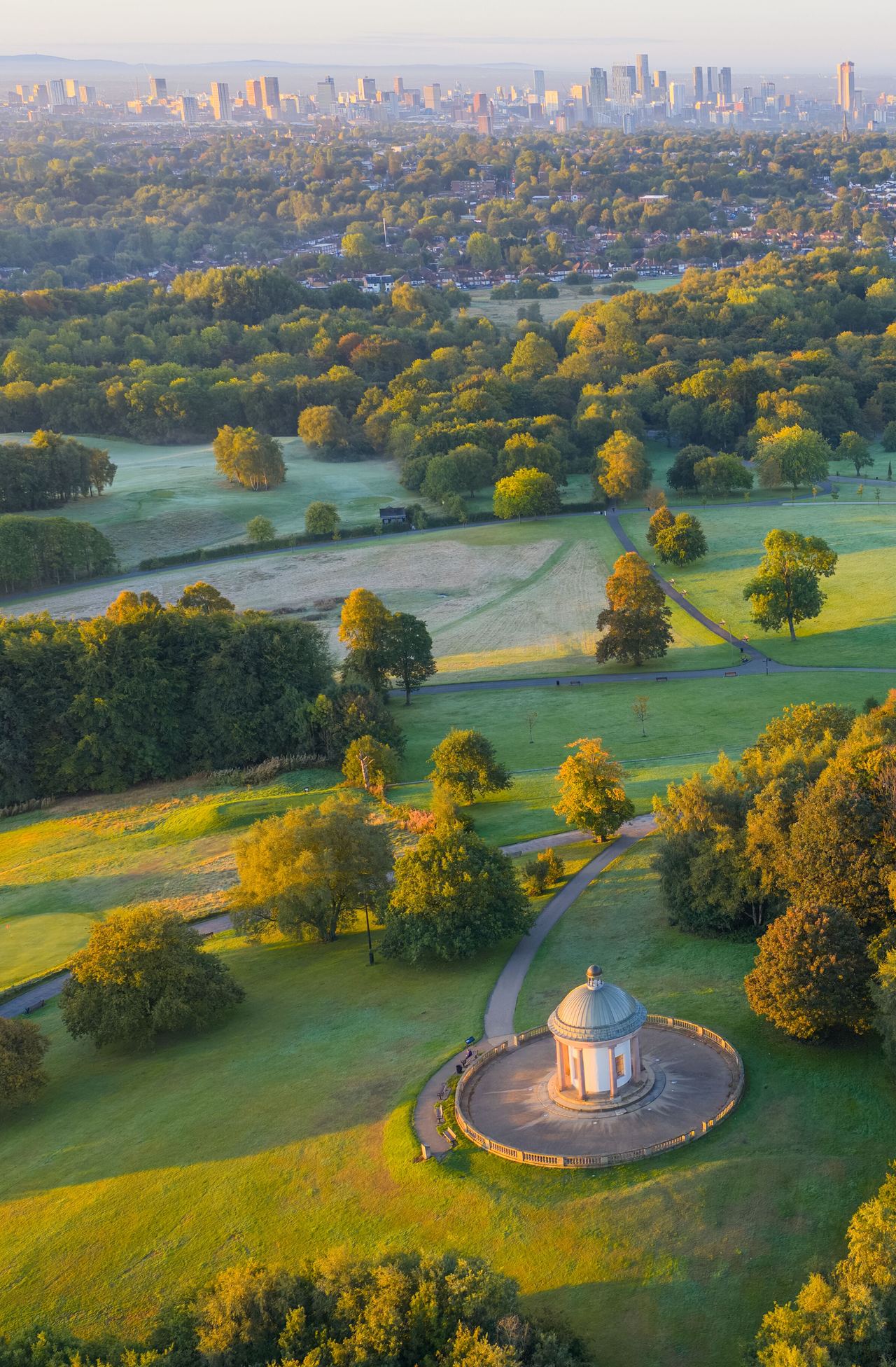
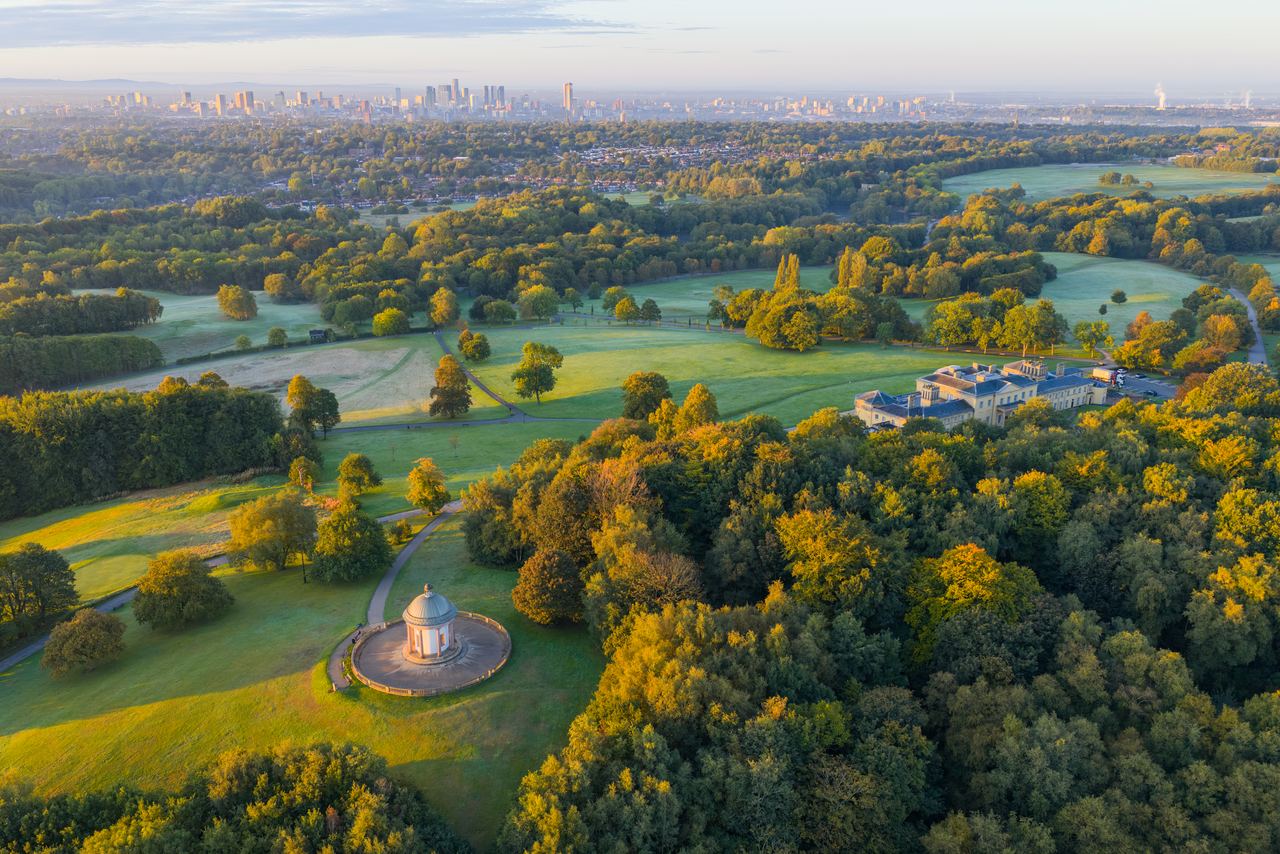
A huge green space was created in Manchester at an early stage. At 240 hectares, Heaton Park is actually the largest in the UK and, with its woods, meadows and small lakes, offers the perfect opportunity to simply immerse yourself in nature. Those keen to venture further out of the city can head to one of the many surrounding national parks. The boasts chalk cliffs and moorland (approx. 20 km, approx. 1.5 hours by public transport). Also worth a visit are the , home to the country’s largest lakes and a UNESCO World Heritage Site (approx. 130 km, approx. 2 hours by public transport), and with its waterfalls, green hills and caves (approx. 100 km, 2.5 hours by public transport).
Things to do in summer
Manchester loves to party – and in summer, people love to do so outdoors. The is the UK’s biggest festival, turning Heaton Park into a party zone with hip-hop, pop, rock and house music. A highlight is the Flower Show, where floral installations are set up throughout the city and live music fills the streets. There’s also the Jazz Festival, open-air cinemas and ever-changing neighbourhood festivals.
If you need to cool off a bit from all the partying, you can do so on Wednesdays and Saturdays at Dock 9 at . Or you can head to in the Peak District – this 1930s swimming pool has a charm all of its own.
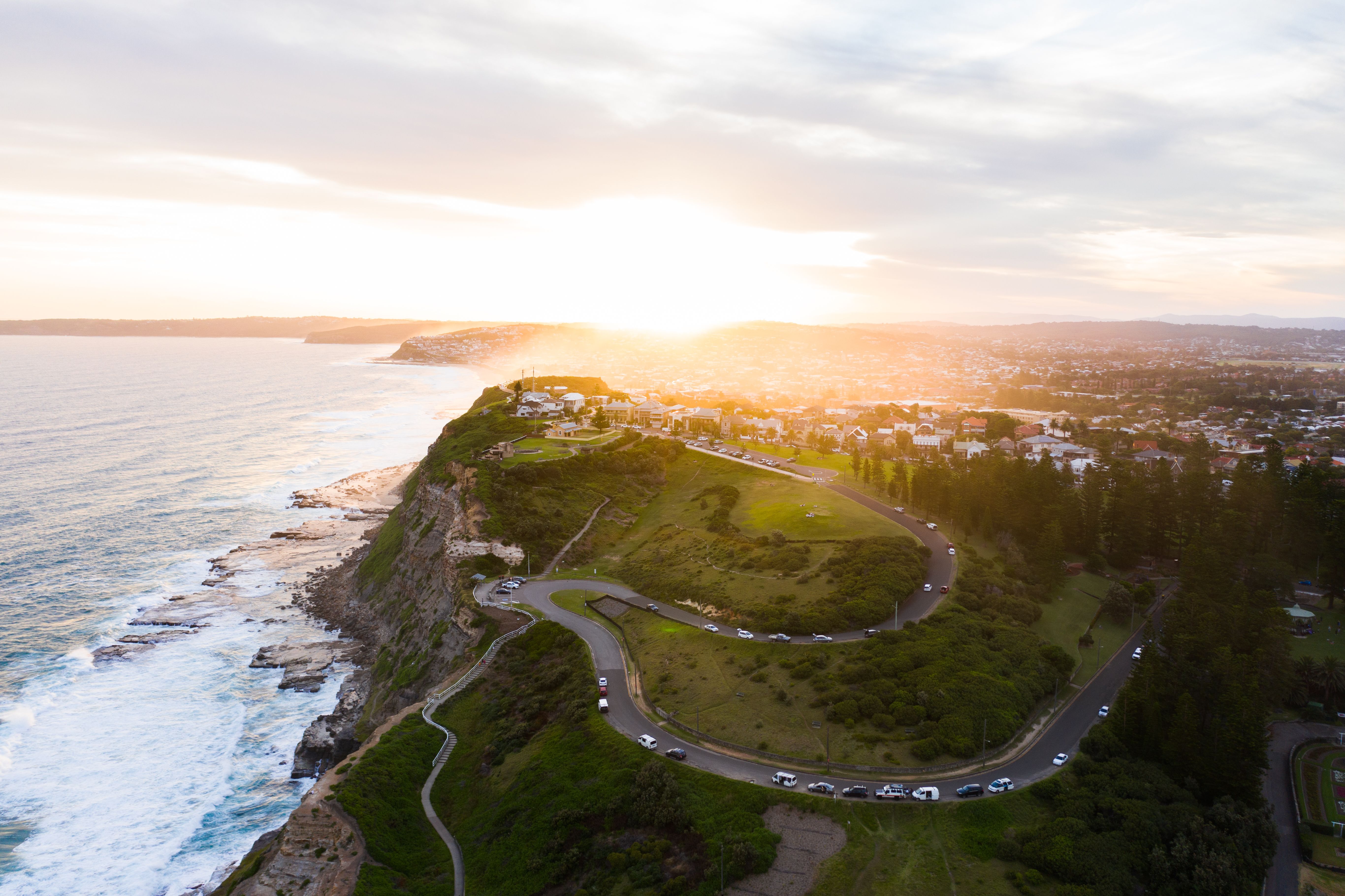
Newcastle, officially Newcastle upon Tyne, was the main hub of English shipbuilding for decades. Today, the cityscape has changed, and this university town near the coast is a hub for modern architecture, art and science.
What’s there to see?
The highlight of the historical sights is the castle that gives the city its name: Newcastle. Although the 12th-century fortress is no longer intact, it offers fascinating insights inside, such as the historic living room. Just a few minutes’ walk away is , where many locals buy their groceries. Opposite, at the end of Market Street, lies a little-known gem: here you’ll find the Central Arcade – a beautiful Victorian-style shopping arcade. On the way there, you’re treated to a view of the Grey Monument. The monument is dedicated to former Prime Minister Charles Grey, after whom the famous Earl Grey tea is named. It’s also well worth simply taking a stroll. For example, through the High Bridge Quarter, where the city’s oldest pub and many vintage shops invite you to browse.
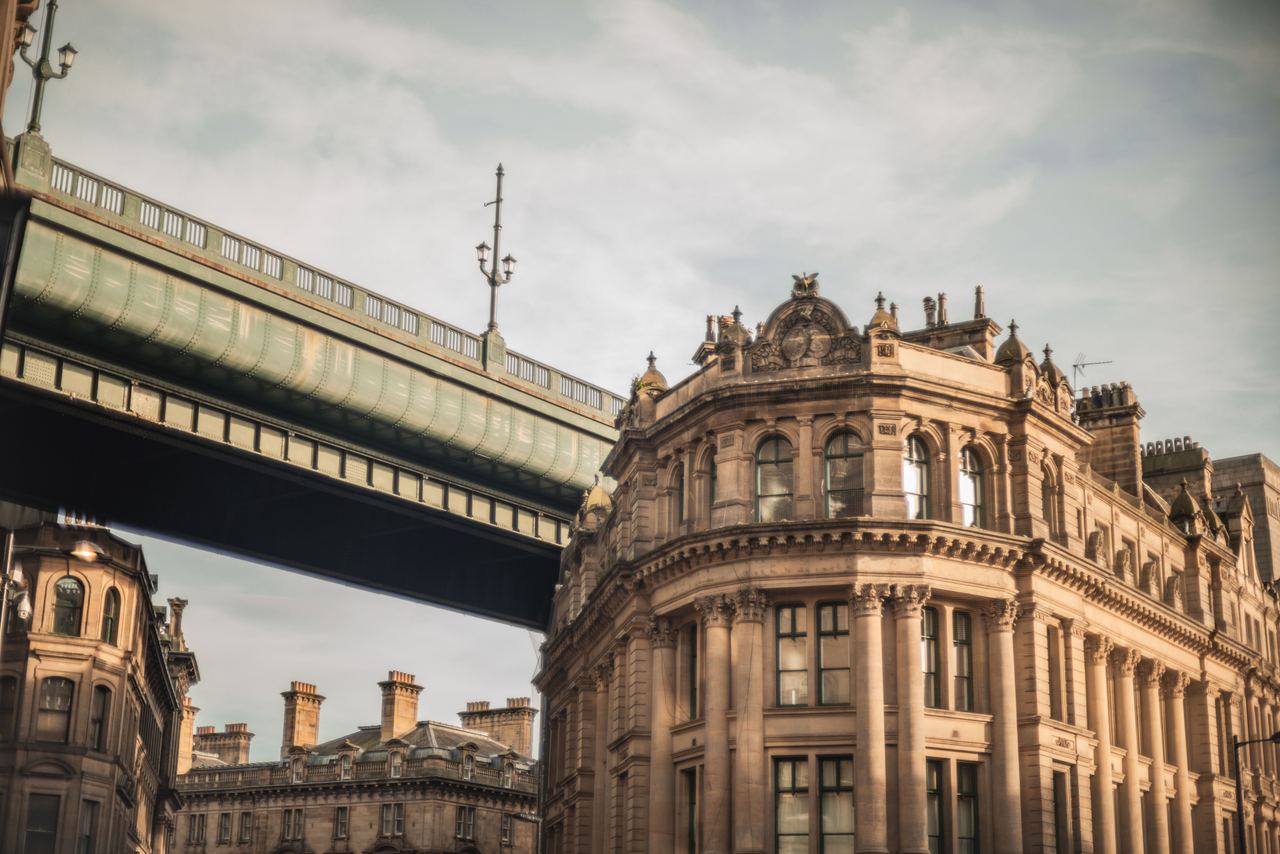
Many centuries more modern, but no less architecturally impressive, are the numerous bridges spanning the river here. The Millennium Bridge, in particular, with its sloping design and grand arch, is a must-see. The view is particularly picturesque at sunrise or sunset, when the sun is reflected in the water and the glass façade of the Sage Gateshead concert hall. The route then continues via a tributary of the Tyne into the Ouseburn Valley. The artists’ quarter has a somewhat village-like feel – the farm, which is open to visitors, adds to this atmosphere.
Green and (almost) free
Kids travel free: Although the city is easy to explore on foot or by bike, families using public transport have something to look forward to. Children travel free on the metro.
Art & culture: Entry to almost all of the city’s museums is free. Art lovers will be drawn, for example, to the , the , the or the (where you can even buy art). Science and railway enthusiasts will find what they’re looking for at the , whilst nature lovers will be delighted by the .
Well-informed: The free ‘Newcastle’s Best’ app isn’t just for tourists. It not only provides plenty of background information on the city’s sights, but also regularly features new food spots.
Pure indulgence
In 2009 and 2010, Newcastle was voted one of the most progressive cities in the field of sustainable food by the UK network Sustainable Food Cities – so finding sustainable restaurants is no problem at all. The university town also offers the national dish that no holiday in the UK should be without: fish and chips – only this time, vegan. A meat-free Full English Breakfast is available at . If that’s too hearty for you, pop into the for brunch or for doughnuts.
Some eateries surprise with their unusual locations. (which also serves vegan fish and chips) is housed in a former railway station; The is a pottery shop and restaurant in one; and the vegan pub is located in a brick building under a bridge. Those who prefer a picnic can shop at the monthly Vegan Market on Grainger Street or at – Newcastle upon Tyne’s first zero-waste and refill shop.
Out into nature
Getting out into the countryside is easy in Newcastle. Many of the surrounding natural attractions are accessible thanks to the well-developed local transport network. One of the destinations is the Angel of the North in the Northumbrian countryside, an angel statue with a wingspan of 54 metres.
A trip to Tynemouth is a must. It takes just 15 minutes by train, and you can then dip your toes in the sand.
If you fancy something a bit greener, head to Jesmond, north-east of the city centre. The park, with its woodland, old mill and waterfalls, is a little oasis and just a short walk from West Jesmond underground station.
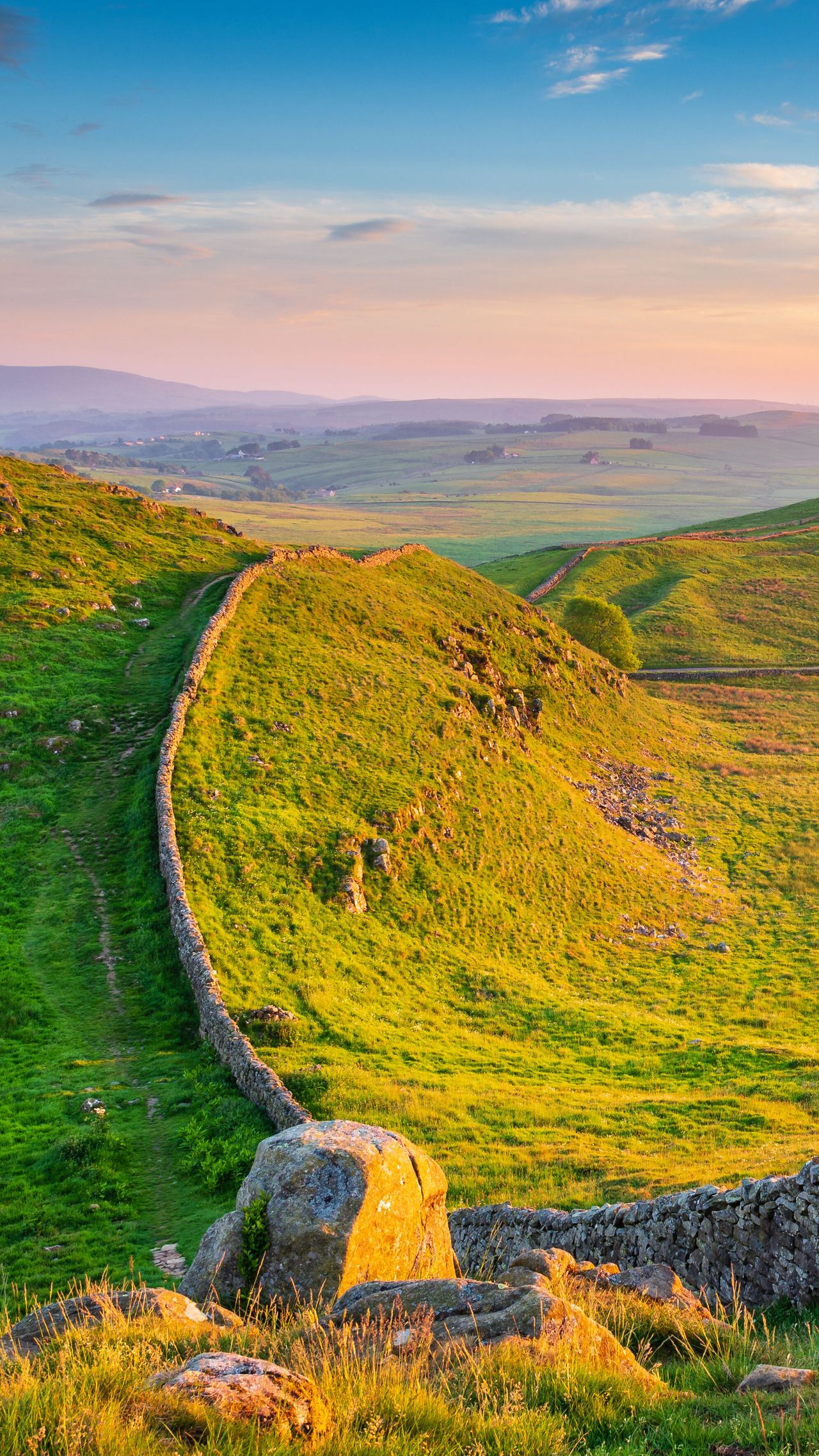
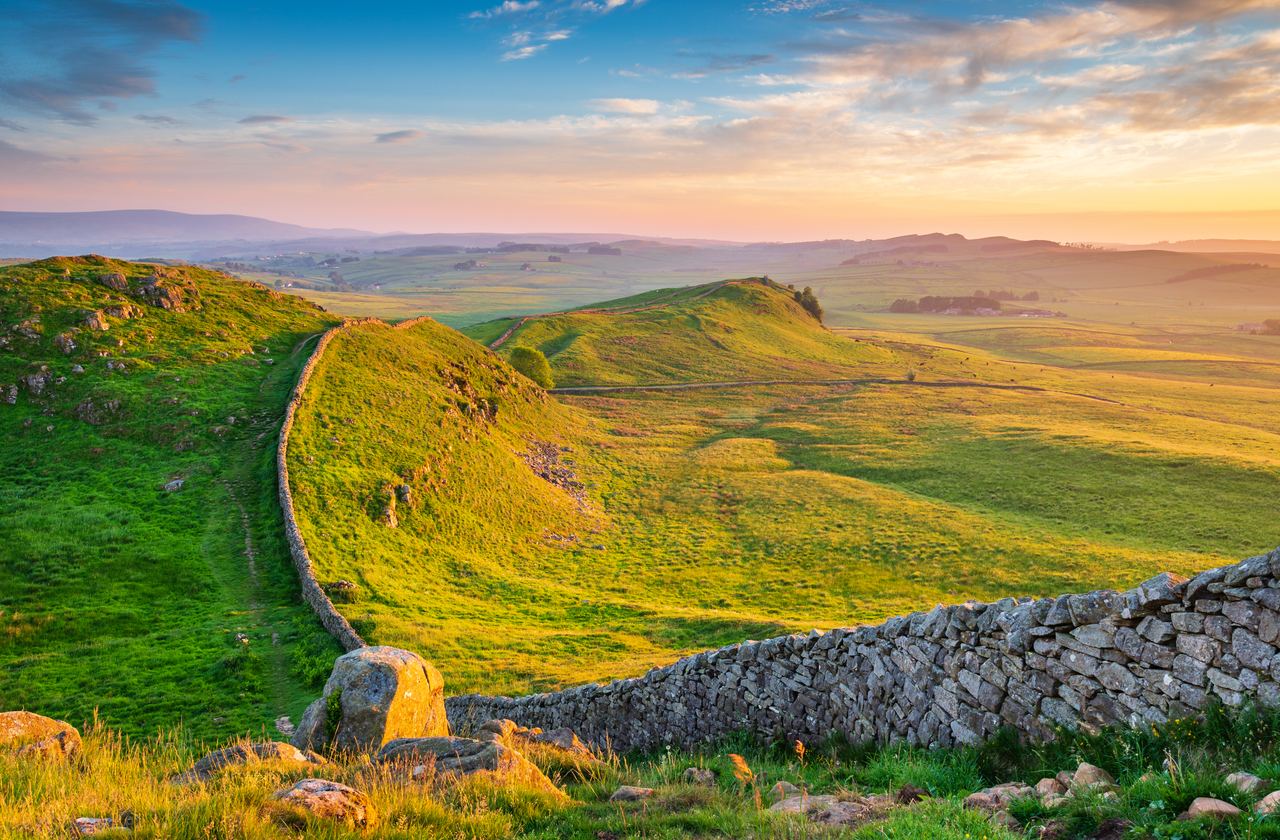
History buffs shouldn’t miss a trip to Hadrian’s Wall at the end of Wallsend tube station. The fortification wall, built by the Romans, is 120 kilometres long. You can walk its length along the to Bowness-on-Solway in six to eight days.
Things to do in summer
As soon as temperatures rise to summer levels, it’s a great idea to explore the city from the water. Kayaks, SUPs and canoes are available from or .
Those who prefer to stay on dry land will appreciate the city’s summer festivals. At , Europe’s largest funfair, there are not only rides but also concerts and performances. Live acts and theatre also attract crowds at . UK Pride brings colour and diversity to the city’s streets.
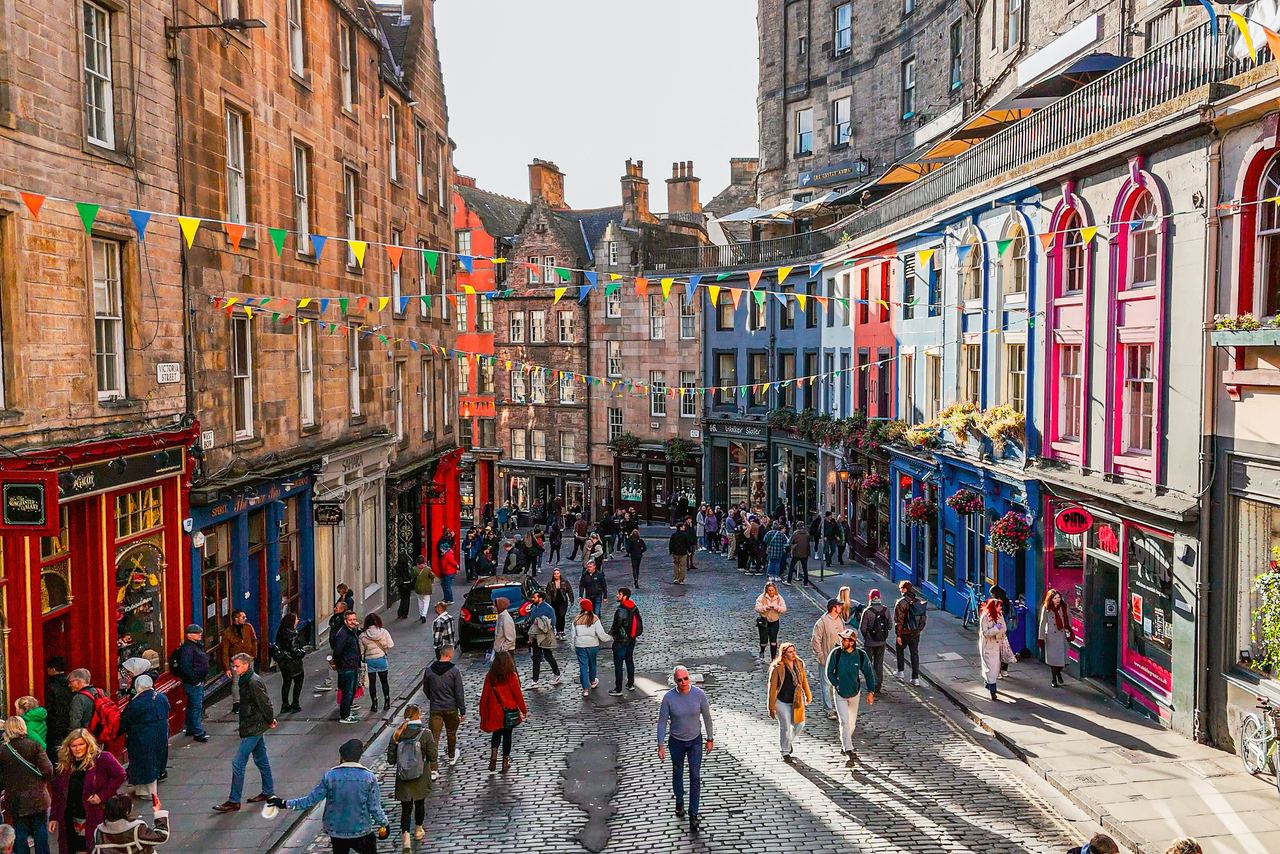
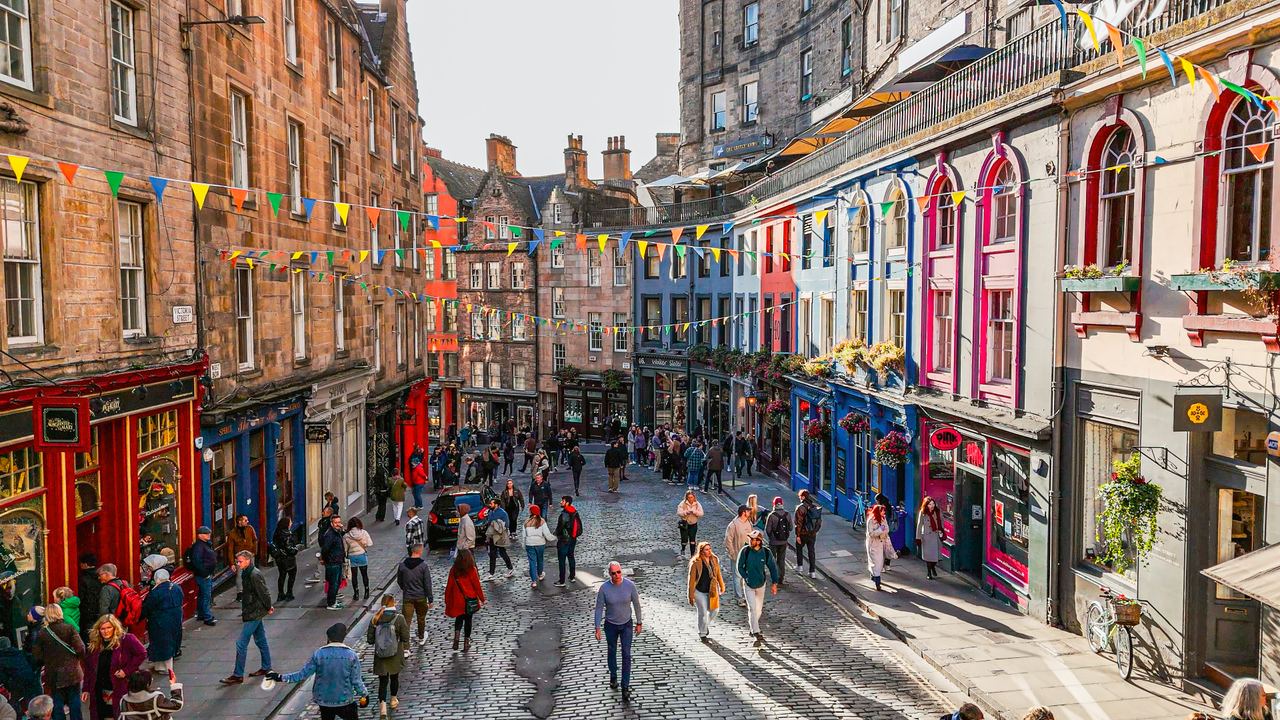
In Edinburgh, royal history meets spectacular views. The Scottish capital is built on seven hills (it’s less tiring than it sounds) and is characterised by numerous cobbled alleyways. That’s why the most comfortable way to it is
What’s there to see?
A good starting point for exploring the centre of Edinburgh is the castle on Castle Hill. From here, head down the Royal Mile to the Palace of Holyroodhouse. Along the way, you’ll pass St Giles’ Gothic cathedral and, a few streets away, Calton Hill. Leave the hill to your left for now and return to it at sunset. From the Royal Mile, head first to the Palace of Holyroodhouse (the Royal Family’s official residence in the city) and then on to the local hill, Arthur’s Seat. From here, you’ll enjoy one of the most spectacular views over the city and the surrounding countryside – in good weather, you can even see as far as the sea.
In the evening, head back to Calton Hill. Here you’ll find the National Monument, Nelson’s Monument and the observatory – a popular spot to watch the sun disappear behind the city. Our tip: Pre-order a picnic basket from the vegan deli and coffee shop or stock up on treats at one of the many markets (e.g. Stockbridge Market, Pitt Market or Grassmarket) and enjoy them up here.
If you’d like to learn more about the city’s lesser-known stories, book a tour with . This social enterprise offers jobs as city guides to formerly homeless people. On themed tours, you can learn more about the city’s women, for example, or explore Edinburgh’s darker side on crime tours.
Green and (almost) free
A feast for the eyes: Entry to the lush (excluding the glasshouses) is free. Although entry is free, you must book a ticket in advance.
Pure culture: Whether it’s , , St Giles’ Cathedral or : entry to many attractions is free, but often needs to be booked in advance. Tip: head to the sixth floor of the National Museum of Scotland. With a bit of luck, you’ll be able to access the roof terrace and enjoy a panoramic view of the city.
Audio guide: has put together several audio guides to help you explore the city at your own pace. You’ll learn fascinating facts about Edinburgh and the surrounding area along the way.
Money-saving tip: It’s worth buying tickets for attractions online in advance. These are often slightly cheaper than buying them at the ticket office.
Pure indulgence
Haggis, arguably Scotland’s most famous dish, is anything but vegan, given that its main ingredient is sheep’s stomach. However, those who prefer meat-free cuisine no longer have to miss out on this traditional dish. offers a vegan version of haggis. Another classic, the British breakfast, is also available in a meat-free version at . If, after hearty home-style cooking, you fancy something a bit lighter, you’ll find plenty to satisfy your appetite at vegetarian , at , or at , the country’s oldest vegetarian restaurant. If you’re in the mood for a bit more sweet treat, you can stock up on doughnuts, ice cream and artisan chocolate at .
Out into nature
Scottish nature begins just a few steps from the Old Town. In the suburb of Leith, you can stroll along the beside the small river to Dean Village, which enchants with its colourful and historic houses.
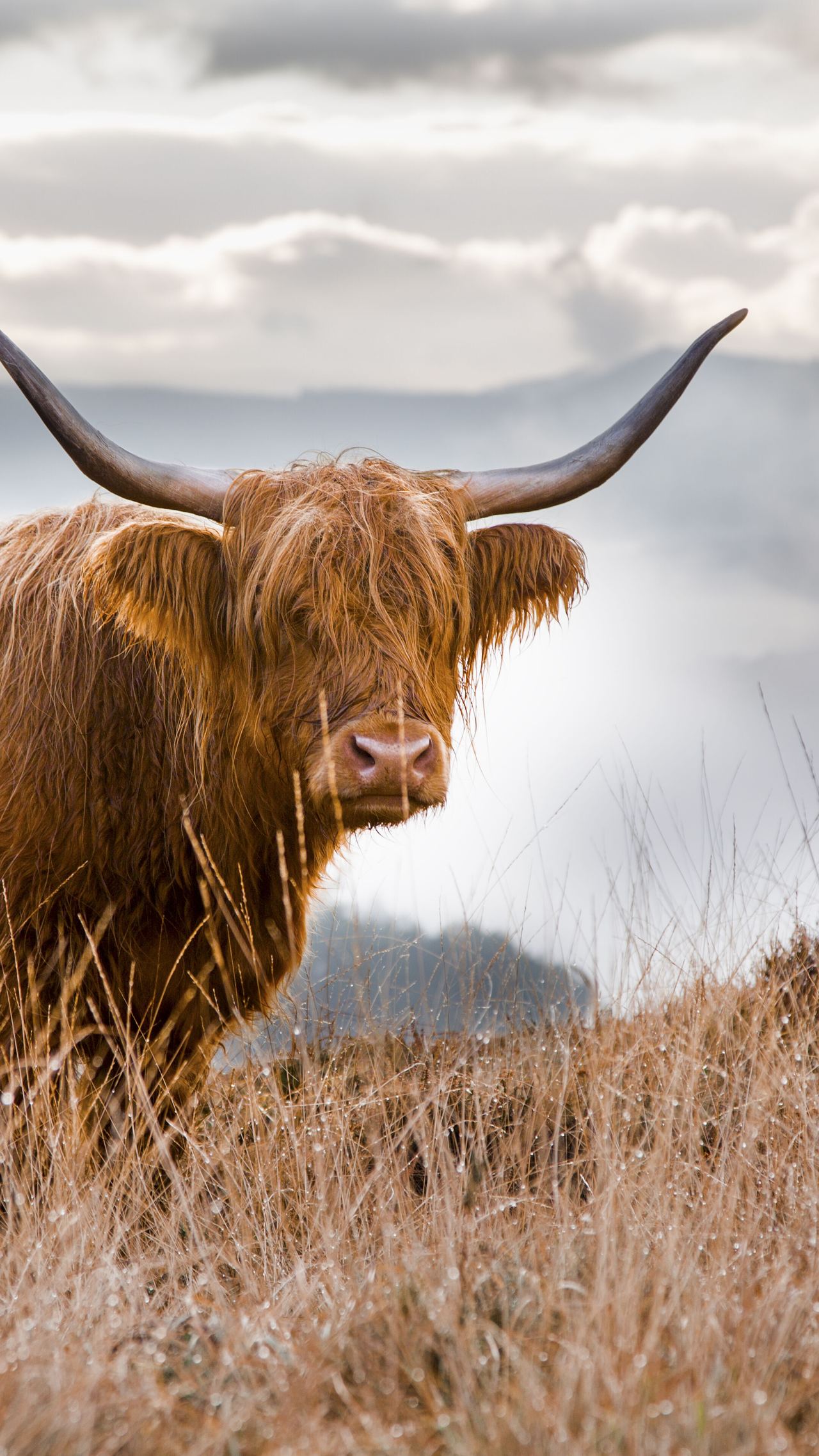
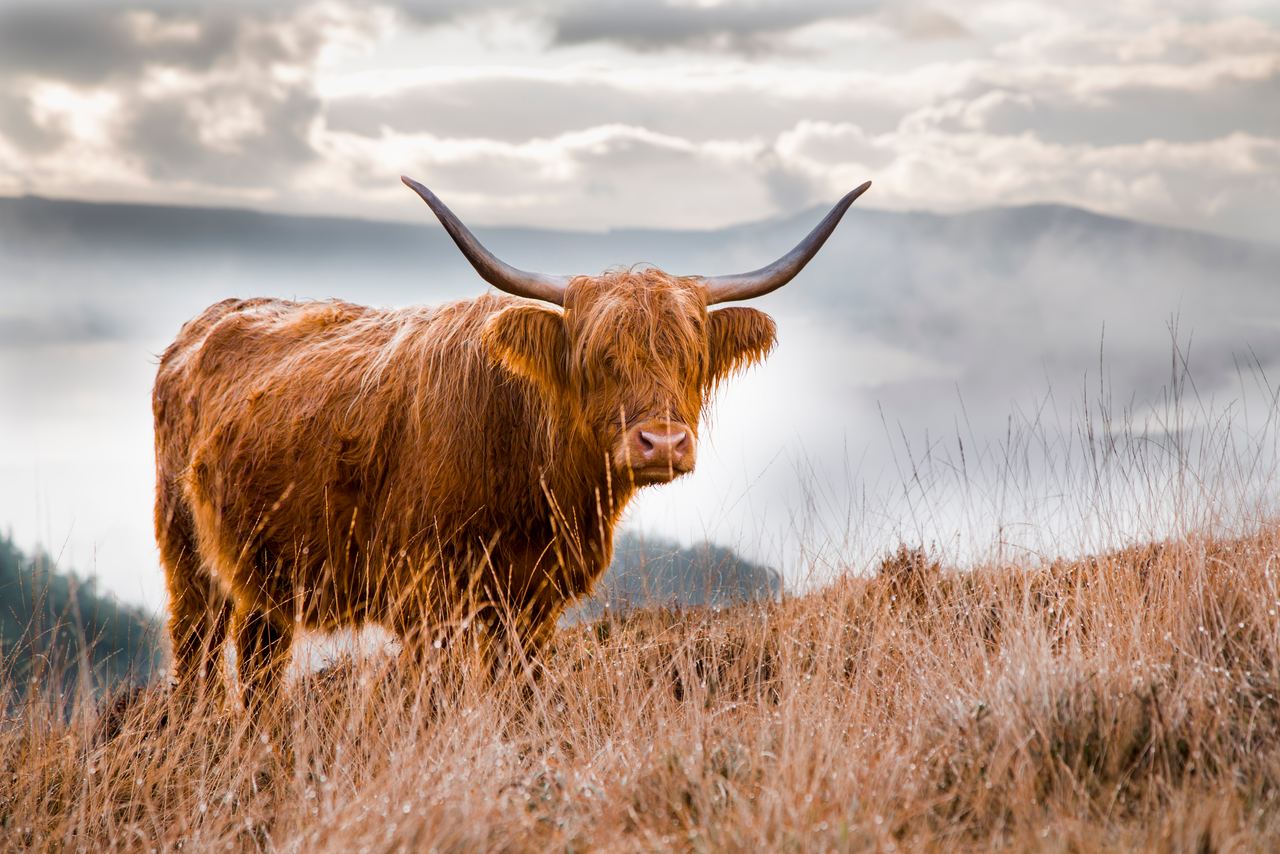
A real insider tip is a visit to . A short bus ride from the city centre takes you to the peaceful country house, where you can play golf and enjoy regional delicacies. But what makes this place truly special are the famous furry residents. If you hike up the gentle hills behind the farm, you’re very likely to encounter not only Shetland ponies but also Scottish Highland cattle grazing there in the wild. Don’t worry, the animals are very calm and are happy to be admired by walkers from a distance. Please do respect the safety distance here and do not try to stroke the animals, so as not to startle them.
Just outside the city lies . The extensive grounds, featuring copses and an award-winning Japanese garden, offer plenty of peace and relaxation. Those wishing to explore nature actively can burn off some energy on the network of over 100 kilometres of trails in , south-west of the city.
Summer activities
In Edinburgh, summer is spent at outdoor celebrations, concerts and festivals. The world’s largest cultural festival takes place here every year: . There are also numerous other events such as small food festivals, the Jazz and Blues Festival and The Big Beach Bust at nearby Portobello Beach. The beach is worth a visit not just in summer. Here you can listen to the sound of the North Sea waves or cool off in them.
So off to Glasgow! Our tips for a